
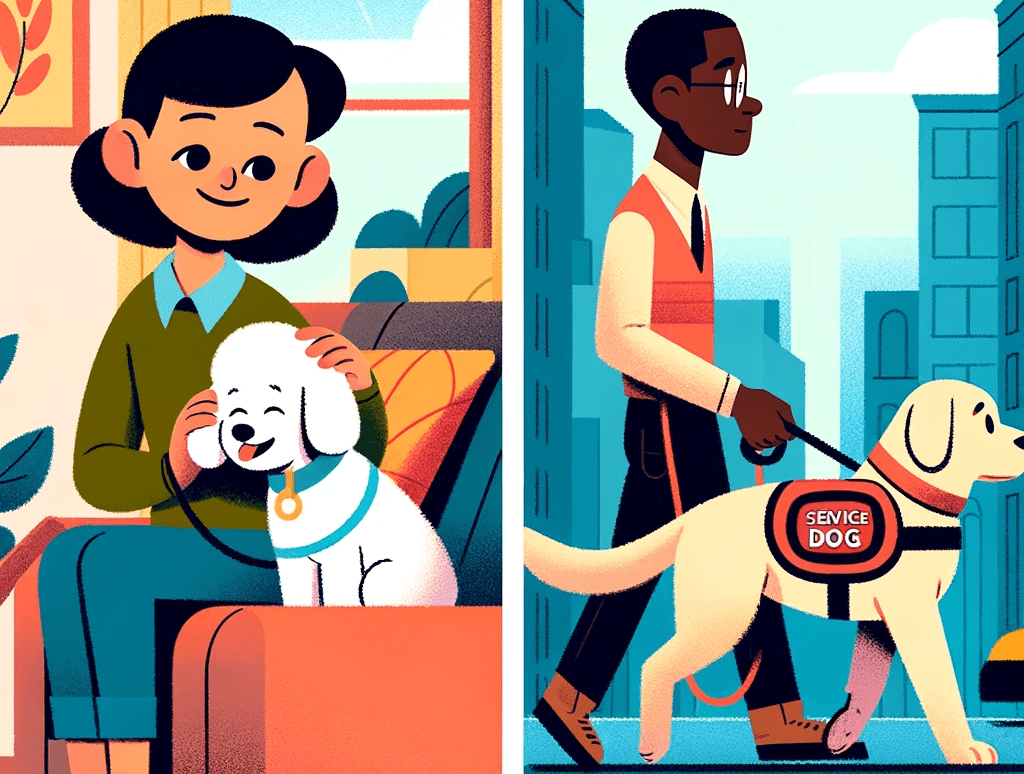
An emotional support animal (ESA), is a wonderful companion for someone dealing with mental health challenges. It’s essential to understand the distinction between an ESA and a service animal. A service animal is trained for specific tasks, like aiding mobility or retrieving items. In contrast, an ESA offers support simply through their presence. However, some training can be invaluable, especially if your ESA will accompany you in public spaces or travel with you. Here’s a gentle guide to teaching your ESA some helpful behaviors and cues:
Cue for Sitting
It’s beneficial for your ESA to respond to a sit cue. This is particularly useful when you’re out together – maybe waiting at a crosswalk, standing in line, or even during casual conversations. Fortunately, teaching this cue is usually straightforward and can be quickly grasped by dogs of any age. This should be your pet’s go to behavior.
Cue for Lying Down
Just as crucial as the sit cue, teaching your ESA to lie down is key. Practice this both at home and in various outdoor settings. Remember, consistency is key, especially amidst the distractions of the outside world. Practice having your ESA lay down under your legs, especially at restaurants.
Cue for Staying
While you’re unlikely to leave your ESA unattended, mastering the stay cue is a sign of a well-rounded companion. Start with short distances and gradually increase both the distance and duration. Patience is essential here. A good goal is 30 seconds and up to 20 feet of distance.
Cue for Quiet
Barking can be a challenge with ESAs. Under the Fair Housing Act, and similar laws in other countries, landlords must accommodate ESAs. However, disruptive behavior could lead to complications. Teaching your dog to respond to a quiet cue is invaluable and, while it may take time, it’s achievable with consistent effort.
Socialization
Arguably more important than the basic cues is socialization. Your ESA will encounter various people and animals, so ensuring they are comfortable and friendly is paramount. If you have a reactive dog, remember, it’s never too late to work on socialization, though it may take time and patience.
Travel Readiness
If travel is a part of your routine, gradually introduce your ESA to different travel environments. Familiarization with these settings, along with crate training if necessary, can significantly reduce travel-related stress for both of you.
In essence, while an ESA doesn’t require specific training, investing time in nurturing their behavior and responsiveness can greatly enhance the support they provide. Regular, patient training will lead to a wonderfully well-behaved ESA, creating a harmonious bond between you and your furry companion.
 Pawsitive Choice
Leave a comment