
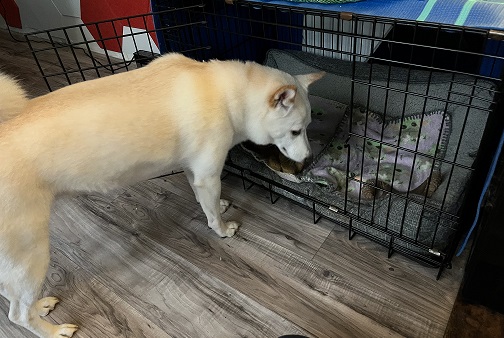
Teaching your pup to settle and be comfortable when left alone is a crucial aspect of dog training, yet it’s often overlooked. Dogs are naturally social animals, so being alone doesn’t come naturally to them. Many pup parents struggle to leave their dogs alone without stress or frustration. It’s our responsibility to help our doggos feel calm and confident when left alone. With patience and time, you can achieve this, and here’s how:
Building Confidence Around Barriers
Start by helping your dog become confident around barriers. Decide where your dog will be left when unsupervised, such as a crate or pen, to prevent destructive behavior or toileting accidents. Ensure the crate is appropriately sized, so your puppy doesn’t use part of it as a toilet. Dividers can help if you plan to use a larger crate.
Encourage your pup to rest in their crate or pen with the door open, and offer a stuffed toy like a frozen peanut butter KONG for a positive association. Practice opening and closing the door while they’re calm, rewarding them for staying relaxed. If the dog doesn’t want to go IN the crate yet, you can practice next to the crate first.
You can also do this around baby gates and doors. For example, scatter treats outside the bathroom door while you’re inside. This keeps your dog occupied while you move in and out. If you plan an activity that may take longer, provide an activity/time consuming toy on the other side of the door.
Gradual Departures
Avoid the “ferberize the baby” technique, as it can cause long term emotional distress. Instead, prepare your pupper for your departures gradually. Don’t make your departures sudden or lengthy.
Monitor your dog’s progress with a doggie camera or baby monitor (I use a furbo personally). Leaving an item with your scent in their safe space can be comforting. Avoid incrementally longer departures as dogs catch on quickly.
Make your leaving routine uneventful. For instance, grab your keys and then sit down to watch TV. This prevents your cues from signaling your departure. For my own dogs, I’ll put on clothes, then go lay in bed for a few minutes and play on my phone. My dog thinks I’m going to leave, but is then redirected from her anxiety when it becomes snuggle time in bed.
Prioritize Your Pet’s Emotions
Before diving into separation training, focus on settling your dog into their space and ensuring their comfort. Rushing into separation training can lead to confusion and anxiety from day one.
Remember, preparing your dog to be left alone might seem like a lengthy process, but it’s essential for their well-being. If you’re struggling, reach out to me, I’d be happy to help.
 Pawsitive Choice
Leave a comment